June 11, 2026
The Boost News
We’re coming up on a full year since H.R. 1 (President Trump’s “Big Beautiful Bill Act”) was signed into law on July 4, 2025. Included in the bill was nearly $1 trillion in cuts to Medicaid, a program jointly funded by states and the federal government. The bill also conditioned Medicaid eligibility for some adults in the Affordable Care Act Medicaid expansion group (and the two states in partial expansion waiver programs) on meeting work, or community engagement, requirements starting Jan. 1, 2027.
Then, on June 1 of this year, the Centers for Medicaid and Medicare released an Interim Final Rule (IFR) that will guide implementation of those requirements and its “medically frail” exemptions. The rule adopts a far more restrictive, and still to be untangled, definition of medical frailty than states had been expecting. (KFF’s CMS Requires More Restrictive Definition of Medical Frailty in New Medicaid Work Requirements Rule is a good primer on the changes.)
To help parse the particulars, I spoke with Kim Musheno, senior director of medicaid policy at The Arc of the United States. With nearly 30 years of experience in disability policy, Musheno has played a key role in shaping many of the nation’s most significant laws affecting people with disabilities, including the Americans with Disabilities Act (ADA), the Affordable Care Act, Medicaid, IDEA, the Autism CARES Act, and the Rehabilitation Act.
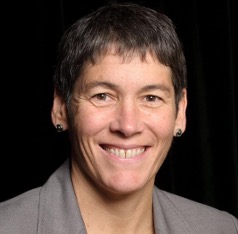
Kim Musheno (Photo Credit: The Arc of the United States)
Our conversation touched on the Medicaid cuts in H.R.1, the Trump administration’s hunt for alleged Medicaid fraud and how it’s affecting home and community-based services in all 50 states, the ramifications of the new work requirement exemptions, and more. The interview has been edited and condensed for clarity. — Roberta Bernstein, Editor, The Boost
THE BOOST: Thanks for taking the time to do this. The ramifications of the Medicaid cuts in H.R. 1. have families and caregivers of people with intellectual and developmental disabilities (IDD) scared and confused. Just how worried should people be?
KIM MUSHENO: I’m very concerned, and I don’t blame people for being worried. H.R. 1 contains almost $1 trillion in Medicaid cuts over 10 years. That’s an historic cut and it amounts to a huge cost shift to states. It limits states’ flexibility to raise their state Medicaid match; increases eligibility checks; increases co-pays; and imposes paperwork burdens on individuals, families and professionals.
States are going to have to make difficult decisions about how to make up for the loss of federal funds. Will states raise taxes, take away from other parts of the budget, limit eligibility, or cut services? Since home and community-based services [HCBS] are optional under Medicaid, we’re concerned that states will cut these critical services that help people with disabilities live at home and in their communities.
Who’s being hit the hardest?
Medicaid expansion states, because many of these barriers apply to them. [Note: Since January 1, 2014, states have had the option to extend Medicaid coverage to most non-elderly adults with income up to 133% of the Federal Poverty Level.] The law imposes work or community engagement requirements as a condition to keep Medicaid coverage. We know that when this was tried in the past, in Arkansas, for example, thousands of people lost coverage due to the paperwork burden.
We were going to the Hill every day talking about how bad cuts would be for people with IDD, and some members of Congress and their staff would say to us over and over again, “These cuts are not going to affect your people. Your people aren’t going to get hurt.” It’s not true.
People with IDD are in all parts of the Medicaid system, including the expansion population. The HCBS services that are so important to keeping people in the community — like bathing dressing, eating, therapies, and respite care — are optional under Medicaid. So, when states need to make cuts because they’re receiving less federal support, what are they going to cut? They’re going to look to the optional services that don’t feel “optional” to people with IDD.
And then Health and Humans Services Secretary Robert F. Kennedy Jr., comes out swinging, and says that family caregivers are being paid for routine daily tasks they used to do for free, and that HCBS is “rife with fraud.” It’s a cruel narrative. Is HCBS just considered low-hanging fruit?
I don’t think many policymakers understand what it’s like for family caregivers who are caring for people with disabilities. Caregiving can be wonderful but it can also be difficult work, especially for those caring for family members with serious and complex medical and/or behavioral support needs. HCBS is often the difference between living in the community and being forced into an institution.
Right, the conversation turns to institutional care.
Yes, we’re extremely concerned that these changes could push states backwards.
Last year New York celebrated the 50th anniversary of the Willowbrook Consent Decree, which stated that New York was committed to providing opportunities for community living, and led to the closure of the school. I personally worried that there wasn’t much at the moment to celebrate.
It makes us feel like policymakers just don’t know what it’s like to live in our shoes. The Willowbrook anniversary was important because it reminded us how far we’ve come from a time when people with disabilities were routinely isolated and denied basic dignity.
But I also think it should be a moment of reflection, not just celebration. The promise of Willowbrook was not simply to close an institution; it was to build a system where people with disabilities can live in their communities with the services and supports they need. It’s about whether we’re meeting our legal and moral commitments to people with disabilities and their families.
Which brings us to a discussion of the federal attack on alleged Medicaid fraud. The Task Force to Eliminate Fraud, overseen by Vice President J.D. Vance, was established in May of this year and is coordinating so-called anti-fraud efforts in all 50 states. This includes pausing federal Medicaid funding for past expenditures, which it’s already done in Minnesota and California. Can you tell me what you see as the biggest impact so far of these actions, and where you see things going?
The narrative of fraud to make further cuts is overwhelming. This is not a question of whether fraud should be addressed. It should. The question is whether the response protects program integrity without disrupting access to care.
You do see some states taking a step back, like in Ohio where Republicans in the state legislature just backed away from banning family members from serving as paid caregivers. That must be in some part due to people making noise. How successful is grassroots advocacy in fighting back against these claims of fraud?
Yes, The Arc of Ohio was actively part of pushing back on that proposal. They organized families to come and testify about how important family caregiving is so that policymakers could get a real picture of what it’s like.
Organizing really helps. We also saw in the Idaho budget cut discussions that would have significantly cut home and community-based services, but disability advocates testified in droves. They did make some cuts to disability programs, but they didn’t eliminate HCBS services due to advocacy.
That’s great to hear.
Also, in Maryland there were major cuts in the budget for the developmental disability services and, well, there were still pretty major cuts, but they weren’t as bad as originally proposed due to advocacy.
There was also a lot of local [Maryland] news coverage about the cuts, and that must have helped as well.
Yes, the news coverage helps.
It’s a vicious circle, because where is that care going to come from? There aren’t enough paid caregivers or Direct Support Professionals (DSPs), and in part that’s because they work so hard and are so underpaid.
And it’s getting worse. State budgets could also cut rates to Direct Support Professionals.
They can’t go any lower.
A lot of Direct Support Professionals are in the Medicaid expansion population so their health coverage is also being threatened. Now the administration is asking all 50 states to conduct a revalidation of providers. They started in Minnesota and not all providers are even participating. Some haven’t gotten a notice, some don’t know they need to be doing this.
I know it’s early days, but is there any way to quantify yet what’s happening at the state level with these cuts and allegations?
There are some projects just being put into place to try to do just that, like at the GW Milken Institute School of Public Health. But they’re just getting up and running, and it’s not easy to do because every state has options to create their own programs and provide certain services to different populations. But they’re trying, and it will be good to have data on the impact of these cuts.
Moving on to the latest news, last week a final rule was issued on Medicaid and work/community requirements that adopts a much more restrictive definition of ‘medical frailty’ than states were expecting. What’s your understanding of what the reporting requirements will be — given that the ruling is some 400 pages long — and how they will or perhaps won’t impact the IDD population?
We’re very worried that this could lead to a loss of coverage for some adults with IDD, especially those in the Medicaid expansion adult group.
We’re still reading and evaluating the new IFR, which just came out on June 1. It could lead to a loss of coverage for some adults with IDD, especially those in the Medicaid expansion group or other 1115 demonstration populations who have not become eligible through SSI, Medicare, HCBS level of care or disability-based eligibility pathways.
The IFR defines “medical frailty” as including an individual who is blind or disabled; with a substance use disorder; with a disabling mental disorder; with a physical, intellectual or developmental disability that significantly impairs their ability to perform one or more activity of daily living [ADLs]; or with a serious or complex medical condition. Additionally, the condition or diagnosis must significantly also impair the individual’s ability to comply with the community engagement requirement.
Therefore, to qualify for the medical exemption or “medical frailty exemption,” people with IDD must demonstrate that their condition impairs at last one ADL and that their condition impairs their ability to meet the work requirement. The latter is an additional requirement on top of the entire medical frailty exemption, not in the original statute, and it creates additional barriers for people with IDD to qualify for this exemption.
The other thing we noticed was that Medicaid-funded supported employment doesn’t seem to count as work. A lot of supported employment is paid for by Medicaid. Education can count, volunteer work can count. Why wouldn’t supported employment count? It’s work.
What are the chances that the administration will throw this all up in the air have it come back down a different way in six months?
There’s an opportunity to comment on the IFR until the end of July. I expect that there will be a lot of comments discussing that states are not ready to implement these work requirements, which are coming up; they kick in January 2027 and states aren’t ready, especially given that they were getting indications from CMS that the medical frailty definition would be broader.
The Arc will be commenting from a national level and I know that our state and local chapters are eager to comment.
And, of course, we asked CMS in our comments to allow for self-attestation [or an individual stating that they have a medical condition and shouldn’t have to prove that they do]. It allows it, but only in the first year.
Which raises the question of why people with an established disability determination can’t be placed in an automatic renewal process.
It should be automatic. That’s what we were hoping for.
The IFR tells states to use ex parte, or existing data sources, so that people who should be exempt are automatically exempted. We are hoping that states will set that up so that people with IDD or serious and/or complex needs will be exempt. We just worry that some people will fall through the cracks if states do not have good data systems set up or that they don’t do comprehensive and accessible outreach.
I spoke to someone in New York State who’s a mother of a child with IDD and who also helps families navigate Medicaid renewals. She says that this year they’ve seen a lot of people with lifelong disabilities lose coverage during the redetermination process because of administrative barriers and paperwork issues. Is this because of the current chaos or is there something else happening?
Well, we started to see that through the unwinding of Medicaid after the pandemic, [during which] there had been continuous eligibility. After COVID there was a what we call “the unwinding process.” They had redeterminations and many who should have remained eligible fell off the program.
As you said, it was the paperwork burdens and other barriers. Maybe people don’t have access to the internet or didn’t get the notice or didn’t fill out the paperwork correctly.
Is there anything we haven’t covered that you think is important for families and caregivers to know or should watch out for?
I’m just extremely concerned about the disability system’s infrastructure, that this chaos will lead to providers failing. If we don’t support our providers of services and the people that do the hard work, we’re going to fall backwards and go back to institutional care. Nobody wants that.
I like to end things on an upbeat note or solutions, but these changes have me feeling kind of beat down…
Well, I do think advocacy works. One, because of disability advocates and others pushing back, H.R. 1 didn’t go as far as Congress wanted. They didn’t change the structural nature of Medicaid to block grants, which would have been really, really terrible.
And looking at the state level, advocacy works there, too. Efforts to push back on some of the cuts in Maryland and Idaho and now in Ohio worked. I encourage individuals and their families to tell their stories to local, state and federal policymakers — and also to reporters.
I appreciate that perspective, as well as a shout-out to advocacy work. I also wonder, on a more optimistic note, if and when a new, hopefully more democratic (my word), administration is elected into office that this can all be upended quickly. Or does that kind of change or mopping up just take an onerous amount of time?
Disability is nonpartisan and impacts every family regardless of what party they’re in. We’ve always built champions on both sides of the aisle. But we do tell people to get out and vote and make sure you’re educating candidates about the needs of people with disabilities.
As to how quickly changes could happen, well, Congress could reverse the cuts that they made to Medicaid and SNAP. There are two bills [that have been introduced]: the Protecting Health Care and Lowering Costs Act [S. 2556/HR 4849], which would reverse the health care cuts in HR1, and the Restoring Food Security for American Families and Farmers Act of 2025 [HR 6088/S. 3281], which would reverse the cuts to SNAP.
There are also bills that would boost resources for home and community-based services and increase wages for Direct Support Professionals. I would encourage folks to ask their members of Congress to support these bills.
It’s going to take time to rebuild, but it can be reversed, and The Arc is working to build support for home and community-based services. We believe everyone should get the supports they need to live, work and play in their communities.