Homepage June 26, 2026
DOJ memo stokes fear among disability advocates of a return to institutionalization (NPR)
Trump Administration Claims People With Disabilities Don’t Have Right To Community-Based Services (Disability Scoop/paywall)
Stephen Miller Said to Drive DOJ Memo Eroding Disability Rights (Bloomberg Law)
Takeaways from the Ed Dept-HHS special ed agreement (K-12 Dive)
Disability Groups Fear RFK Jr.’s New Special Ed Role (The New York Times)
Senate panel considers vote to shield special ed from RFK Jr.’s agency (USA Today)
Splitting Up Special Ed and Civil Rights Will Dilute Services for Students, Experts Say (The 74)
Autistic people aren’t afraid of genetic research – they are afraid of what scientists might do with it (The Conversation)
Even for some who have scrutinized N.Y.’s CDPAP transition, the Trump administration’s lawsuit is not welcome (Spectrum Local News)
Largest Medicaid pediatric provider sues Florida’s DeSantis administration over pay rates (News from the States)
Georgia special education violations nearly triple as student needs rise (Atlanta News First)
Maryland extends behavioral health provider enrollment halt (Becker’s Behavioral Health)
Michigan Department of Education unveils new plan to support students with disabilities (Michiganpublic.org)
How private equity is gobbling up disability services (Disabled Journalists Association)
Intellectual and Developmental Disability News for Week Ending June 26, 2026
SPOTLIGHT: ‘OLMSTEAD VS. L.C.’ REDUX
Late last week, the Dept. of Justice issued a memo that attempts to weaken civil rights protections for individuals with disabilities. The memo argued that “while federal law prohibits discrimination on the basis of disability, it does not impose an ‘integration mandate’ on states to provide these community services.” The memo seemingly contradicts the landmark Supreme Court case Olmstead vs. L.C., which ruled that individuals with disabilities have the right to live in their communities.
The NPR article, DOJ memo stokes fear among disability advocates of a return to institutionalization, does a good job of breaking things down. It contains this sobering assessment: “For now, it’s not clear what the immediate impact of the memo will be, though it seems the Justice Department will stop its enforcement efforts around Olmstead.”
Trump Administration Claims People With Disabilities Don’t Have Right To Community-Based Services (Disability Scoop/paywall)
DOJ Opinion on Olmstead Threatens the Right of People With Disabilities to Live in the Community (The Arc)
The Executive Branch’s Assault on the Integration Mandate (The Coalition for Disability Rights and Justice)
Stephen Miller Said to Drive DOJ Memo Eroding Disability Rights “Miller, the president’s powerful deputy chief of staff, was frustrated that the department’s Civil Rights Division was still reaching settlements compelling states to transfer those experiencing mental illness out of institutions, added the individuals, who spoke anonymously out of fear of retaliation.” (Bloomberg Law)
DEPT. OF ED
Also last week, The Trump administration continued its dismantling of the Department of Education. It moved oversight of the Office for Civil Rights to the Department of Justice, and the Office of Special Education and Rehabilitative Services (OSER), to the Department of Health and Human Services.
Takeaways from the Ed Dept-HHS special ed agreement (K-12 Dive)
Disability Groups Fear RFK Jr.’s New Special Ed Role (The New York Times)
Senate panel considers vote to shield special ed from RFK Jr.’s agency (USA Today)
Splitting Up Special Ed and Civil Rights Will Dilute Services for Students, Experts Say (The 74)
Parents of kids with disabilities protest federal changes to special education, civil rights (EdSource)
Broad Coalition of Disability, Civil Rights, and Education Organizations Denounces ED’s Latest Transfers of Core Functions (Autism Society)
MORE SPECIAL ED
More than half of states miss targets for improving special education (K-12 Dive)
MEDICAID
National Health Care Fraud Takedown Results in 455 Defendants Charged in Connection with Over $6.5 Billion in Alleged Fraud Consider the source. (Dept. of Justice)
SNAP
More Than 770,000 Children Are No Longer Receiving SNAP Benefits After Trump Changes Federal Food Program (ProPublica)
AUTISM
This autism therapy is covered by many insurers. Why does the military’s plan restrict it? (NBC News)
Autistic people aren’t afraid of genetic research – they are afraid of what scientists might do with it When two Swedish doctors asked autistic people and parents of autistic children in Sweden how they feel about genetic research in autism, one response stood out: “I hope genetic research finds new ways to help us, not erase us.” (The Conversation)
STATES
Note: This starts with New York, where a majority of The Boost’s readership currently is based, and continues alphabetically by state.
Firm behind NY’s troubled home health care overhaul agrees to $160M wage settlement According to the complaint, tens of thousands of home care workers in New York City, Westchester and Long Island experienced payment errors because of PPL’s mismanagement of CDPAP. It comes on the heels of a Trump administration lawsuit (see below) that accuses officials of failing to police PPL. (Gothamist)
Even for some who have scrutinized N.Y.’s CDPAP transition, the Trump administration’s lawsuit is not welcome (Spectrum Local News)
New York defends Medicaid oversight, CDPAP at congressional fraud hearing (News10)
Advocate for Medical Aid in Dying responds to lawsuit brought by people with disabilities in NY The lawsuit argues that the law, scheduled to go into effect on Aug. 5, discriminates against individuals with disabilities. (NY State of Politics)
Largest Medicaid pediatric provider sues Florida’s DeSantis administration over pay rates (News from the States)
Georgia special education violations nearly triple as student needs rise The trend is illustrated by a recent case: The state found a student was disciplined for behaviors directly resulting from their disability. (Atlanta News First)
Maryland extends behavioral health provider enrollment halt The six-month moratorium comes amid efforts to address potential fraud, waste and abuse. (Becker’s Behavioral Health)
Michigan Department of Education unveils new plan to support students with disabilities (Michiganpublic.org)
PRIVATE EQUITY
How private equity is gobbling up disability services Private equity companies “have gobbled up group homes and other services for people with disabilities, attracting the attention of state and federal regulators across the nation and alarming advocates. People with intellectual or developmental disabilities have suffered abuse, neglect and even death while under the care of private equity-owned providers, according to a recent report from watchdog group Private Equity Stakeholder Project.” (Disabled Journalists Association)
STUDIES & REPORTS
2026 Determination Letters on State Implementation of IDEA (US Dept. of Ed)
Homepage news for week ending June 19 2026
RFK Jr. Will Oversee Disability Education Policy (Mother Jones)
Isolation & Neglect: Disability Advocates Fear Return to a Bleak Past Under HHS (The 74)
Families of kids with disabilities warn Education Department changes could break a flawed system (AP)
Linda McMahon says she heard parents. Parents say special education changes show she didn’t listen. (Chalkbeat)
What will the Justice Department OCR agreement mean for schools? (K-12 Dive)
The private school choice boom leaves behind many kids in public school (AP)
Study Linking Vaccines to Autism Retracted (MedPage Today)
White House autism announcement triggers surge in online searches for leucovorin, Tylenol (CIDRAP/Univ. of Minnesota)
U.S. Sues N.Y. State Over Troubled $11 Billion Home Health Care Program (The New York Times)
In NY, parents of disabled kids fault state for closing Jowonio School, which they saw as a godsend (syracuse.com)
Alabama Medicaid adds new requirement for autism-related ABA referrals starting July 1 (WSFA.com)
Colorado may tighten the rules for specialized facility schools serving students with intense needs (Chalkbeat)
Illinois establishes Department of Disability Advocacy and Guardianship (Our Quad Cities)
Indiana pauses autism therapy provider signups for at least six months (Indiana Capital Chronicle)
Kansas drops out of lawsuit targeting senior and disability rights (News from the States)
NC lawmakers seek tighter rules for autism therapy in push to eliminate Medicaid fraud (NC Newsline)
Airlines must train staff to better assist disabled travelers (USA Today)
Intellectual and Developmental Disability News for Week Ending June 19, 2026
SPOTLIGHT: SPECIAL EDUCATION
The Trump administration’s ongoing plan to dismantle the Department of Education — laid out in the far-right’s Project 2025 blueprint to restructure the government — resulted this week in a critical and possibly crippling hit to students with intellectual and developmental disabilities.
In short, it’s moving oversight of the department’s Office for Civil Rights, which has already experienced mass layoffs, to The Department of Justice, and the Office of Special Education and Rehabilitative Services (OSER), which manages billions of dollars in grants and oversees state compliance with the Individuals with Disabilities Education Act (IDEA), to the Department of Health and Human Services.
The Education Department “already has offloaded some of its programs through 10 earlier internal agreements, but the offices affected by Tuesday’s announcement were among the most closely watched,” writes the Associated Press. The 74 writes that “much of what the Trump administration envisions for special education is likely illegal.”
“HHS and DOJ … weren’t built to replace the Department of Education’s school-specific expertise,” Robyn Linscott, The Arc’s director of education and family policy, said in a statement. “Moving [the Individuals with Disabilities Education Act] oversight into HHS pushes students with disabilities toward a medical model, where disability is treated as a diagnosis to manage instead of a natural part of human life.”
Worse, Secretary of HHS, Robert F. Kennedy Jr., has spent decades spreading disinformation about autism and “villainizing autistic people.”
The IDEA is intended to equip students as they learn alongside their peers, not cure them, writes the AP. Jennifer Coco, interim executive director of the Center for Learner Equity, noted that “the HHS is not prepared to oversee and administer the IDEA program effectively. Health and education systems speak in entirely different languages, including variations in terminology, training and disciplines.”
Learn more about the changes:
RFK Jr. Will Oversee Disability Education Policy (Mother Jones)
Isolation & Neglect: Disability Advocates Fear Return to a Bleak Past Under HHS (The 74)
Families of kids with disabilities warn Education Department changes could break a flawed system (AP)
Linda McMahon says she heard parents. Parents say special education changes show she didn’t listen. (Chalkbeat)
What will the Justice Department OCR agreement mean for schools? (K-12 Dive)
MORE ON SPECIAL ED
3 states sue over cancelled special education teacher training grants California, Rhode Island and Wisconsin say the cuts are harmful. (K-12 Dive)
The private school choice boom leaves behind many kids in public school Leaving the public school system is risky for many students with I/DD. Private schools aren’t legally required to admit students with special needs, and aren’t obligated to offer services. (AP)
School Districts Are Struggling to Keep Up With Surging Special Education Needs If the trends continue at the same pace as the last decade, students with disabilities would make up 25% of the student population by 2035. (Governing)
AUTISM
Study Linking Vaccines to Autism Retracted A 2010 paper that linked hepatitis B vaccines in infant boys to an increased risk of autism diagnosis was retracted and another study by the same authors is under investigation (MedPage Today)
White House autism announcement triggers surge in online searches for leucovorin, Tylenol (CIDRAP/Univ. of Minnesota)
‘Autistic kids are being experimented on’: inside America’s booming market for unproven stem cell infusions The infusions are backed by HHS Secretary RFK Jr. (The Guardian)
VOCATIONAL
OPINION: Workers with disabilities deserve better than subminimum wages A bipartisan bill to end subminimum wages is sitting in Congress. The argument that ending the practice would result in workers with disabilities losing their jobs has been disproved with new peer-reviewed evidence. (The Hill)
STATES
Note: This starts with New York, where a majority of The Boost’s readership currently is based, and continues alphabetically by state.
U.S. Sues N.Y. State Over Troubled $11 Billion Home Health Care Program The Justice Depart. accused officials of failing to police PPL, the company overseeing home care program CDPAP, which it claims has siphoned off millions of dollars. A spokeswoman for Gov. Kathy Hochul called the suit an attempt to weaponize the justice system. (The New York Times)
US Justice Department accuses New York state of letting fraud flourish in Medicaid program (AP News)
Disability rights advocate explains lawsuit against New York’s Medical Aid in Dying law (Spectrum Local News)
Cutting Red Tape: Governor Hochul Unveils First Wave of Regulatory Reforms in Her ‘EXPRESS NY’ Initiative (Governor.ny.com)
In NY, parents of disabled kids fault state for closing Jowonio School, which they saw as a godsend (syracuse.com)
Alabama Medicaid adds new requirement for autism-related ABA referrals starting July 1 (WSFA.com)
Colorado may tighten the rules for specialized facility schools serving students with intense needs The current requirements are “pretty minimal.” (Chalkbeat)
Illinois establishes Department of Disability Advocacy and Guardianship (Our Quad Cities)
Indiana pauses autism therapy provider signups for at least six months More than 6,000 Hoosiers were accessing ABA therapy through Medicaid as of January. (Indiana Capital Chronicle)
Kansas drops out of lawsuit targeting senior and disability rights It pulled out of Texas v. Kennedy, which challenges Section 504 of the Rehabilitation Act. The lawsuit started with 17 states, and just six are left: Texas, Alaska, Florida, Louisiana, Missouri and Montana. (News from the States)
A 22-year-old fell from a window in NJ and died. A year later, another did the same. Families are demanding action His death has renewed calls for action on legislation that would protect people with I/DD, including requiring some group homes to put cameras in common areas. (nj.com)
NC lawmakers seek tighter rules for autism therapy in push to eliminate Medicaid fraud (NC Newsline)
TRAVEL
Airlines must train staff to better assist disabled travelers (USA Today)
ENTERTAINMENT
Netflix To Debut Movie Starring Actor With Down Syndrome (Disability Scoop/paywall)
The Boost Q&A: Kim Musheno, Senior Director of Medicaid Policy at The Arc of the United States
We’re coming up on a full year since H.R. 1 (President Trump’s “Big Beautiful Bill Act”) was signed into law on July 4, 2025. Included in the bill was nearly $1 trillion in cuts to Medicaid, a program jointly funded by states and the federal government. The bill also conditioned Medicaid eligibility for some adults in the Affordable Care Act Medicaid expansion group (and the two states in partial expansion waiver programs) on meeting work, or community engagement, requirements starting Jan. 1, 2027.
Then, on June 1 of this year, the Centers for Medicaid and Medicare released an Interim Final Rule (IFR) that will guide implementation of those requirements and its “medically frail” exemptions. The rule adopts a far more restrictive, and still to be untangled, definition of medical frailty than states had been expecting. (KFF’s CMS Requires More Restrictive Definition of Medical Frailty in New Medicaid Work Requirements Rule is a good primer on the changes.)
To help parse the particulars, I spoke with Kim Musheno, senior director of medicaid policy at The Arc of the United States. With nearly 30 years of experience in disability policy, Musheno has played a key role in shaping many of the nation’s most significant laws affecting people with disabilities, including the Americans with Disabilities Act (ADA), the Affordable Care Act, Medicaid, IDEA, the Autism CARES Act, and the Rehabilitation Act.
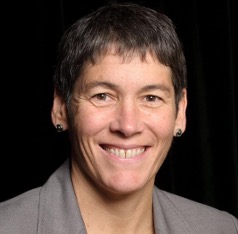
Kim Musheno (Photo Credit: The Arc of the United States)
Our conversation touched on the Medicaid cuts in H.R.1, the Trump administration’s hunt for alleged Medicaid fraud and how it’s affecting home and community-based services in all 50 states, the ramifications of the new work requirement exemptions, and more. The interview has been edited and condensed for clarity. — Roberta Bernstein, Editor, The Boost
THE BOOST: Thanks for taking the time to do this. The ramifications of the Medicaid cuts in H.R. 1. have families and caregivers of people with intellectual and developmental disabilities (IDD) scared and confused. Just how worried should people be?
KIM MUSHENO: I’m very concerned, and I don’t blame people for being worried. H.R. 1 contains almost $1 trillion in Medicaid cuts over 10 years. That’s an historic cut and it amounts to a huge cost shift to states. It limits states’ flexibility to raise their state Medicaid match; increases eligibility checks; increases co-pays; and imposes paperwork burdens on individuals, families and professionals.
States are going to have to make difficult decisions about how to make up for the loss of federal funds. Will states raise taxes, take away from other parts of the budget, limit eligibility, or cut services? Since home and community-based services [HCBS] are optional under Medicaid, we’re concerned that states will cut these critical services that help people with disabilities live at home and in their communities.
Who’s being hit the hardest?
Medicaid expansion states, because many of these barriers apply to them. [Note: Since January 1, 2014, states have had the option to extend Medicaid coverage to most non-elderly adults with income up to 133% of the Federal Poverty Level.] The law imposes work or community engagement requirements as a condition to keep Medicaid coverage. We know that when this was tried in the past, in Arkansas, for example, thousands of people lost coverage due to the paperwork burden.
We were going to the Hill every day talking about how bad cuts would be for people with IDD, and some members of Congress and their staff would say to us over and over again, “These cuts are not going to affect your people. Your people aren’t going to get hurt.” It’s not true.
People with IDD are in all parts of the Medicaid system, including the expansion population. The HCBS services that are so important to keeping people in the community — like bathing dressing, eating, therapies, and respite care — are optional under Medicaid. So, when states need to make cuts because they’re receiving less federal support, what are they going to cut? They’re going to look to the optional services that don’t feel “optional” to people with IDD.
And then Health and Humans Services Secretary Robert F. Kennedy Jr., comes out swinging, and says that family caregivers are being paid for routine daily tasks they used to do for free, and that HCBS is “rife with fraud.” It’s a cruel narrative. Is HCBS just considered low-hanging fruit?
I don’t think many policymakers understand what it’s like for family caregivers who are caring for people with disabilities. Caregiving can be wonderful but it can also be difficult work, especially for those caring for family members with serious and complex medical and/or behavioral support needs. HCBS is often the difference between living in the community and being forced into an institution.
Right, the conversation turns to institutional care.
Yes, we’re extremely concerned that these changes could push states backwards.
Last year New York celebrated the 50th anniversary of the Willowbrook Consent Decree, which stated that New York was committed to providing opportunities for community living, and led to the closure of the school. I personally worried that there wasn’t much at the moment to celebrate.
It makes us feel like policymakers just don’t know what it’s like to live in our shoes. The Willowbrook anniversary was important because it reminded us how far we’ve come from a time when people with disabilities were routinely isolated and denied basic dignity.
But I also think it should be a moment of reflection, not just celebration. The promise of Willowbrook was not simply to close an institution; it was to build a system where people with disabilities can live in their communities with the services and supports they need. It’s about whether we’re meeting our legal and moral commitments to people with disabilities and their families.
Which brings us to a discussion of the federal attack on alleged Medicaid fraud. The Task Force to Eliminate Fraud, overseen by Vice President J.D. Vance, was established in May of this year and is coordinating so-called anti-fraud efforts in all 50 states. This includes pausing federal Medicaid funding for past expenditures, which it’s already done in Minnesota and California. Can you tell me what you see as the biggest impact so far of these actions, and where you see things going?
The narrative of fraud to make further cuts is overwhelming. This is not a question of whether fraud should be addressed. It should. The question is whether the response protects program integrity without disrupting access to care.
You do see some states taking a step back, like in Ohio where Republicans in the state legislature just backed away from banning family members from serving as paid caregivers. That must be in some part due to people making noise. How successful is grassroots advocacy in fighting back against these claims of fraud?
Yes, The Arc of Ohio was actively part of pushing back on that proposal. They organized families to come and testify about how important family caregiving is so that policymakers could get a real picture of what it’s like.
Organizing really helps. We also saw in the Idaho budget cut discussions that would have significantly cut home and community-based services, but disability advocates testified in droves. They did make some cuts to disability programs, but they didn’t eliminate HCBS services due to advocacy.
That’s great to hear.
Also, in Maryland there were major cuts in the budget for the developmental disability services and, well, there were still pretty major cuts, but they weren’t as bad as originally proposed due to advocacy.
There was also a lot of local [Maryland] news coverage about the cuts, and that must have helped as well.
Yes, the news coverage helps.
It’s a vicious circle, because where is that care going to come from? There aren’t enough paid caregivers or Direct Support Professionals (DSPs), and in part that’s because they work so hard and are so underpaid.
And it’s getting worse. State budgets could also cut rates to Direct Support Professionals.
They can’t go any lower.
A lot of Direct Support Professionals are in the Medicaid expansion population so their health coverage is also being threatened. Now the administration is asking all 50 states to conduct a revalidation of providers. They started in Minnesota and not all providers are even participating. Some haven’t gotten a notice, some don’t know they need to be doing this.
I know it’s early days, but is there any way to quantify yet what’s happening at the state level with these cuts and allegations?
There are some projects just being put into place to try to do just that, like at the GW Milken Institute School of Public Health. But they’re just getting up and running, and it’s not easy to do because every state has options to create their own programs and provide certain services to different populations. But they’re trying, and it will be good to have data on the impact of these cuts.
Moving on to the latest news, last week a final rule was issued on Medicaid and work/community requirements that adopts a much more restrictive definition of ‘medical frailty’ than states were expecting. What’s your understanding of what the reporting requirements will be — given that the ruling is some 400 pages long — and how they will or perhaps won’t impact the IDD population?
We’re very worried that this could lead to a loss of coverage for some adults with IDD, especially those in the Medicaid expansion adult group.
We’re still reading and evaluating the new IFR, which just came out on June 1. It could lead to a loss of coverage for some adults with IDD, especially those in the Medicaid expansion group or other 1115 demonstration populations who have not become eligible through SSI, Medicare, HCBS level of care or disability-based eligibility pathways.
The IFR defines “medical frailty” as including an individual who is blind or disabled; with a substance use disorder; with a disabling mental disorder; with a physical, intellectual or developmental disability that significantly impairs their ability to perform one or more activity of daily living [ADLs]; or with a serious or complex medical condition. Additionally, the condition or diagnosis must significantly also impair the individual’s ability to comply with the community engagement requirement.
Therefore, to qualify for the medical exemption or “medical frailty exemption,” people with IDD must demonstrate that their condition impairs at last one ADL and that their condition impairs their ability to meet the work requirement. The latter is an additional requirement on top of the entire medical frailty exemption, not in the original statute, and it creates additional barriers for people with IDD to qualify for this exemption.
The other thing we noticed was that Medicaid-funded supported employment doesn’t seem to count as work. A lot of supported employment is paid for by Medicaid. Education can count, volunteer work can count. Why wouldn’t supported employment count? It’s work.
What are the chances that the administration will throw this all up in the air have it come back down a different way in six months?
There’s an opportunity to comment on the IFR until the end of July. I expect that there will be a lot of comments discussing that states are not ready to implement these work requirements, which are coming up; they kick in January 2027 and states aren’t ready, especially given that they were getting indications from CMS that the medical frailty definition would be broader.
The Arc will be commenting from a national level and I know that our state and local chapters are eager to comment.
And, of course, we asked CMS in our comments to allow for self-attestation [or an individual stating that they have a medical condition and shouldn’t have to prove that they do]. It allows it, but only in the first year.
Which raises the question of why people with an established disability determination can’t be placed in an automatic renewal process.
It should be automatic. That’s what we were hoping for.
The IFR tells states to use ex parte, or existing data sources, so that people who should be exempt are automatically exempted. We are hoping that states will set that up so that people with IDD or serious and/or complex needs will be exempt. We just worry that some people will fall through the cracks if states do not have good data systems set up or that they don’t do comprehensive and accessible outreach.
I spoke to someone in New York State who’s a mother of a child with IDD and who also helps families navigate Medicaid renewals. She says that this year they’ve seen a lot of people with lifelong disabilities lose coverage during the redetermination process because of administrative barriers and paperwork issues. Is this because of the current chaos or is there something else happening?
Well, we started to see that through the unwinding of Medicaid after the pandemic, [during which] there had been continuous eligibility. After COVID there was a what we call “the unwinding process.” They had redeterminations and many who should have remained eligible fell off the program.
As you said, it was the paperwork burdens and other barriers. Maybe people don’t have access to the internet or didn’t get the notice or didn’t fill out the paperwork correctly.
Is there anything we haven’t covered that you think is important for families and caregivers to know or should watch out for?
I’m just extremely concerned about the disability system’s infrastructure, that this chaos will lead to providers failing. If we don’t support our providers of services and the people that do the hard work, we’re going to fall backwards and go back to institutional care. Nobody wants that.
I like to end things on an upbeat note or solutions, but these changes have me feeling kind of beat down…
Well, I do think advocacy works. One, because of disability advocates and others pushing back, H.R. 1 didn’t go as far as Congress wanted. They didn’t change the structural nature of Medicaid to block grants, which would have been really, really terrible.
And looking at the state level, advocacy works there, too. Efforts to push back on some of the cuts in Maryland and Idaho and now in Ohio worked. I encourage individuals and their families to tell their stories to local, state and federal policymakers — and also to reporters.
I appreciate that perspective, as well as a shout-out to advocacy work. I also wonder, on a more optimistic note, if and when a new, hopefully more democratic (my word), administration is elected into office that this can all be upended quickly. Or does that kind of change or mopping up just take an onerous amount of time?
Disability is nonpartisan and impacts every family regardless of what party they’re in. We’ve always built champions on both sides of the aisle. But we do tell people to get out and vote and make sure you’re educating candidates about the needs of people with disabilities.
As to how quickly changes could happen, well, Congress could reverse the cuts that they made to Medicaid and SNAP. There are two bills [that have been introduced]: the Protecting Health Care and Lowering Costs Act [S. 2556/HR 4849], which would reverse the health care cuts in HR1, and the Restoring Food Security for American Families and Farmers Act of 2025 [HR 6088/S. 3281], which would reverse the cuts to SNAP.
There are also bills that would boost resources for home and community-based services and increase wages for Direct Support Professionals. I would encourage folks to ask their members of Congress to support these bills.
It’s going to take time to rebuild, but it can be reversed, and The Arc is working to build support for home and community-based services. We believe everyone should get the supports they need to live, work and play in their communities.
Intellectual and Developmental Disability News for Week Ending June 12, 2026
AUTISM
Genetic Risk of Autism, ADHD Decreased as Diagnoses Increased (MedPage Today)
MAHA’s Treatments for Autism: Camel’s Milk, Stem Cell Injections — And Spelling Therapy (KFF Health News)
If Autism Research Requires Brain Tissue, Why Aren’t People Donating? (Autism Spectrum News)
MEDICAID
Final Rules for Medicaid Work Requirements Are Out. Here’s What You Need To Know. (KFF.org)
Too sick to work, but can they prove it? New Medicaid rule worries patients (AP)
How sick is sick enough? New Medicaid work rule worries patient advocates, states. (Politico)
Medicaid Work Rules Force States To Scrap Plans And Rework Systems (Disability Scoop/paywall)
MEDICAID & THE STATES
In Calif., Disability rights advocates protest Newsom’s proposed cuts to in-home support services (Los Angeles Times)
Looming Medicaid Cuts Supercharge California’s Latest Labor-Industry Fight (KFF Health News)
Medicaid paperwork problems continue to cost thousands of Missourians coverage (Missouri Independent)
Proposed Ban on paid family caregivers in Ohio removed from Medicaid reform bill (Cleveland.com)
As Ohio targets Medicaid fraud, elderly Ohioans and those with disabilities fear losing their independence (Cleveland.com)
Ban on Medicaid payments to family caregivers would be devastating, say disabled Ohioan (Statehouse News Bureau)
Ohio families challenge proposed Shield Act over Medicaid caregiver payments (WLWT.com)
CAREGIVING
The Price of Caring: When Unpaid Caregiving Becomes a Human Rights Issue (Human Rights Research Center)
EDUCATION
California, Rhode Island and Wisconsin sue Trump administration over cuts to special education grants (Courthouse News)
MORE STATE NEWS
Note: This starts with New York, where a majority of The Boost’s readership currently is based, and continues alphabetically by state.
NYS Lawmakers Approve ‘Traveling With Dignity Act’ (NY Disability Advocates)
Disability rights organizations challenge New York’s medically assisted suicide law (NY State of Politics)
Budget plan axes funds for oversight at group homes for Arizonans with developmental disabilities (KJZZ.org)
OPINION: Arizona ESA moms demand voucher reforms to protect education for students with disabilities (AZ Capitol Times)
Colorado to regulate autism therapy providers for first time (The Denver Post/paywall)
In Michigan, a development helps with housing ‘crisis’ for people with disabilities A developer is breaking ground on what it says is the first housing community for people with intellectual and developmental disabilities to offer homeownership. (Crains Detroit/paywall)
Michigan seeks to improve graduation rates for students with disabilities (Cleveland19.com)
ABLEISM
Ableism Still Saturates the Abortion Rights Debate. It’s a Problem for Reproductive Justice—Opinion (Rewire News Group)
TRAVEL
Testing Two New Seat Designs That Will Let You Fly in Your Wheelchair (New Mobility)
STUDIES AND REPORTS
Circles of Care: Home and Community-Based Services Supports for People of Color with Disabilities Leaving Institutional Settings (Brandeis Heller School for Social Policy and Management)
YOUTUBERS STOKE CONTROVERSY
YouTubers Post About Abortion After a Down Syndrome Test “The online reaction has thrust into the spotlight one of the most emotionally fraught and rarely discussed decisions that parents have to make.” (The New York Times)
Homepage for June 5, 2026
CMS Requires More Restrictive Definition of Medical Frailty in New Medicaid Work Requirements Rule (KFF)
Medicaid Changes Will Push People With Disabilities Off Program, Advocates Warn (Disability Scoop/paywall)
New Medicaid Expansion Changes Hurt People with Disabilities (Statement from ASAN)
States balk at the high price of Medicaid work requirements amid budget crunch (Politico)
The Autism-Therapy Business Is Booming—and So Is the Billing Abuse (The Wall Street Journal/paywall)
OPINION: Your Child’s ABA Therapy Is Being Rationed. Every Autism Family Needs to Know What’s Happening Right Now. (Autism Innovation)
Minnesota cuts off thousands of Medicaid providers in race to keep federal funds (The Minnesota Star Tribune)
Ohio suspends payments to 49 Medicaid providers following fraud allegations (Dayton Daily News)
Trump cuts off funds to Hawaii Medicaid fraud unit over lack of cases (Reuters)
RFK Jr. Seeks To Peek at Americans’ Medical Records for Clues on Autism and Vaccines (KFF Health News)
Urine Test Can Detect Autism, Study Says (Health Day)
Despite scrutiny, special ed money flows to for-profit residential treatment centers (AP)
Screens are leaving schools fast, though some students with disabilities rely on them (NPR)
Maryland Enacts Law to Require Plain Language Summaries for Ballot Measures (The Accessible Voting Booth, via Voting Rights Lab)
Mass. state legislature approves bill removing outdated disability terms from state laws (WWLP.com)
NJ Gov. taps intellectual and developmental disabilities ombudsman (NJ Globe)
Texas’ discipline push sends kids to ‘jail-like’ campuses (Hechinger Report)
Is Wisconsin violating the rights of disabled voters? Court hears arguments (WPR.org)
Samuel and Dan Habib win Emmy for Best Social Issue Documentary (Concord Monitor)
Intellectual and Developmental Disability News for Week Ending June 5, 2026
SPOTLIGHT: MEDICAID
The Centers for Medicaid and Medicare Services just made receiving Medicaid a hell of a lot harder. Both KFF and Disability Scoop unpack the implications. (And stay tuned for next week’s newsletter, where I’ll post The Boost’s Q&A with The Arc’s Kim Musheno, senior director of Medicaid Policy.)
CMS Requires More Restrictive Definition of Medical Frailty in New Medicaid Work Requirements Rule (KFF)
The rule adopts a restrictive definition of medical frailty that differs from states’ early expectations. “At nearly 400 pages, [it] will require time to fully assess its implications. Given the complexity of the provisions in the rule, states will likely face significant challenges in operationalizing the requirements in the next six months.”
Medicaid Changes Will Push People With Disabilities Off Program, Advocates Warn (Disability Scoop/paywall)
The rule “indicates that individuals with physical, intellectual or developmental disabilities will be considered ‘medically frail’ only if their condition ‘significantly impairs’ their ability to perform at least one activity of daily living, or ADL, which includes bathing, dressing, walking, toileting, eating or getting in and out of bed or a chair.” Other categories include “a serious or complex medical condition.”
Disability advocates warn “that the parameters put forth by CMS for people with disabilities to claim an exemption are far more limited than the definition of disability under the Americans with Disabilities Act.”
New Medicaid Expansion Changes Hurt People with Disabilities (Statement from Autistic Self Advocacy Network)
States balk at the high price of Medicaid work requirements amid budget crunch They’re costing already-strapped states millions or tens of millions to implement. (Politico)
MEDICAID ‘FRAUD’
The Autism-Therapy Business Is Booming—and So Is the Billing Abuse The latest look at Applied Behavior Analysis. (The Wall Street Journal/paywall)
Indiana pauses autism therapy provider signups “Indiana has seen an incredible surge in ABA spending over the past several years — a trend that raises concerns about sustainability and program integrity.” (Indiana Capital Chronicle)
OPINION: Your Child’s ABA Therapy Is Being Rationed. Every Autism Family Needs to Know What’s Happening Right Now. ABA “is not without controversy … and those conversations are worth having. But for thousands of families [it has] helped their child learn to communicate, manage sensory overwhelm, and move through a world that was not built for them.” (Autism Innovation)
Minnesota cuts off thousands of Medicaid providers in race to keep federal funds The state cut ties — at least temporarily — with nearly two-thirds of the Medicaid service providers the state was reviewing to protect programs against fraud and keep federal funds flowing. The decision set off an uproar among providers. (The Minnesota Star Tribune)
Ohio suspends payments to 49 Medicaid providers following fraud allegations (Dayton Daily News)
Medicaid termination letters leave South Florida behavioral health patients and therapists in limbo (CBS News)
Trump cuts off funds to Hawaii Medicaid fraud unit over lack of cases Without a federally certified Medicaid fraud unit, the state’s broader Medicaid funding could be in jeopardy. (Reuters)
AUTISM
RFK Jr. Seeks To Peek at Americans’ Medical Records for Clues on Autism and Vaccines HSS wants data from little-known state systems that allow hospitals and clinics to exchange detailed, identifiable patient information to research a debunked link between vaccines and autism. (KFF Health News)
Urine Test Can Detect Autism, Study Says (Health Day)
EDUCATION
Despite scrutiny, special ed money flows to for-profit residential treatment centers Nationwide, “many for-profit residential facilities in the so-called troubled teen industry that claim to treat severe mental and behavioral health issues in children and teens are deftly tapping into taxpayer money meant for students with disabilities.” (AP)
Screens are leaving schools fast, though some students with disabilities rely on them (NPR)
Screen time limits call for nuance, disability advocates say Blanket policies run the risk exacerbating existing challenges and running afoul of federal law. (K-12 Dive)
OPINION: The promise of an appropriate education for every child with a disability is under strain (The Hill)
STATES
Note: This starts with New York, where a majority of The Boost’s readership currently is based, and continues alphabetically by state.
Left Behind: How school buses disadvantage New York City students with disabilities (Chalkbeat)
Colorado Gov. signs bill containing protections for kids with disabilities even as funding remains up in the air The law will add new staff to the state department of education who will investigate complaints of discrimination in schools — if Colorado finds the money. (Colorado Sun)
Maryland Enacts Law to Require Plain Language Summaries for Ballot Measures (The Accessible Voting Booth, via Voting Rights Lab)
Mass. state legislature approves bill removing outdated disability terms from state laws (WWLP.com)
NJ Gov. taps intellectual and developmental disabilities ombudsman Lisa Montalbano, a former CEO of a non-profit helping people with I/DD, will lead the office. (NJ Globe)
Most Oregon preschoolers with disabilities now learn alongside non-disabled peers (Oregon Live)
Gov. of Pa.’s Administration Welcomes 28 College Students with Disabilities for Summer Internships with State Agencies (Pa. Gov. Newsroom)
South Dakota releases annual special ed performance reports (kotatv.com)
Texas’ discipline push sends kids to ‘jail-like’ campuses Students with disabilities are more likely to end up in DAEPs, and when they do they are unlikely to get the services and accommodations they are owed under federal law, advocates said. (Hechinger Report)
Is Wisconsin violating the rights of disabled voters? Court hears arguments Those groups argued that voters with disabilities should be allowed to receive, fill out and return an absentee ballot electronically (WPR.org)
ACROSS THE POND
How pupils with special educational needs are more likely to see their schools close (BBC)
OBIT
Frank Hayden, Who Led Global Growth of the Special Olympics, Dies at 96 (The New York Times)
EMMY WINNERS!
Samuel and Dan Habib win Emmy for Best Social Issue Documentary The award went to “The Ride Ahead: Love, Tattoos, and Other Disabled Things.” It follows Samuel as he deals with romance, transitions to independent living, pursues an associate degree and advocates for disability rights, features conversations with his mentors with disabilities. It’s their second Emmy. (Concord Monitor)
Home page week ending May 29 2026
Short Naps, Long Hours: How Autism Clinics Squeeze Medicaid Dollars Out of Preschoolers (The New York Times)
Parental mental health — not medication — drives autism correlation, new study finds (Los Angeles Times/paywall)
Congress slashed Medicaid funding to providers. The Trump administration wants to cut even further (Stat News/paywall
Democratic attorneys general snub Vance’s anti-fraud roundtable at White House after late invite (CNBC)
Under White House pressure, Missouri speeds up effort to find Medicaid fraud (The Beacon News)
NJ defends record on uncovering Medicaid fraud in response to White House criticism (New Jersey Monitor)
Map: SNAP Enrollment Has Dropped in Every State (Governing.com)
What’s in the 2026 NYS Budget? Here’s What To Know (NY Focus)
New York Medicaid beneficiaries confront barriers in accessing home care, study finds (McKnights Home Care)
California’s $2.4 billion special ed boost addresses critical needs, but challenges remain (EdSource)
Colorado bill aims to protect students with disabilities, but awaits governor’s signature (9news.com)
Nearly 8,000 Await Medicaid Waiver as Georgia Cuts Budget for 400 Spots, Council Says (Press release)
Louisiana invests $5.1 million to help students with disabilities (KTAL News)
Maryland budget cuts, looming deadlines put family caregivers in a ‘complete tailspin’ (News from the States)
New law will enhance emergency response for people with disabilities (Virginia Mercury)
Ed Dept wants to end some IDEA data collections; special ed and disability groups pushed back (K-12 Dive)
Autistic students who make it through college face a bigger challenge: getting jobs (The Hechinger Report)
Federal judge refuses to block Trump executive order on mail voting — for now (Votebeat)
Adults with developmental disabilities or cerebral palsy face earlier fall injury risks (News-Medical.net)
Ranking the U.S. Airlines Most Likely to Damage Your Wheelchair (2026) (Wheelchair Travel)
Intellectual and Developmental Disability News for Week Ending May 29, 2026
AUTISM
Short Naps, Long Hours: How Autism Clinics Squeeze Medicaid Dollars Out of Preschoolers A NYT investigation found that the rapid expansion if A.B.A.-focused clinics has played out with little regulatory oversight and brought allegations of children being harmed by profit-motivated practices. (The New York Times)
Parental mental health — not medication — drives autism correlation, new study finds An analysis of 37 studies totaling more than half-a-million pregnancies with antidepressant use found no significant link between common antidepressant use during pregnancy and autism/ADHD in children after adjusting for the mother’s mental health and other factors. If you can’t read the Times story due to the paywall, here’s a press release. (Los Angeles Times/paywall)
MEDICAID
Congress slashed Medicaid funding to providers. The Trump administration wants to cut even further Behavioral health providers, dentists, and doctors could face steep cuts. (Stat News/paywall
Senators call for more Medicaid HCBS funding as part of a larger plan to increase funding for long-term care services. (McKnights Home Care)
MEDICAID ‘FRAUD’
Democratic attorneys general snub Vance’s anti-fraud roundtable at White House after late invite (CNBC)
DeWine, Dr. Oz address alleged Medicaid fraud in Ohio (NBC4)
Under White House pressure, Missouri speeds up effort to find Medicaid fraud (The Beacon News)
NJ defends record on uncovering Medicaid fraud in response to White House criticism (New Jersey Monitor)
SNAP
Map: SNAP Enrollment Has Dropped in Every State (Governing.com)
STATES
Note: This starts with New York, where a majority of The Boost’s readership currently is based, and continues alphabetically by state.
What’s in the 2026 NYS Budget? Here’s What To Know Human services providers (e.g., DSPs), contracted by the state will see a 2.7% increase in payments. The budget does not specify how much of that will go toward worker salaries. (NY Focus)
New York Medicaid beneficiaries confront barriers in accessing home care, study finds (McKnights Home Care)
California’s $2.4 billion special ed boost addresses critical needs, but challenges remain As TK-12 enrollment has declined by 8% over the past decade, the number of special ed students has grown by nearly 20%. (EdSource)
San Francisco County Office of Ed to Open New Special Ed Program for Students With Extensive Needs It’s for students with autism and intellectual disabilities, and the aim is to reduce costly non-public school placements and long transportation times for families. (KQED.org)
Colorado bill aims to protect students with disabilities, but awaits governor’s signature A bill sitting on Gov. Jared Polis’s desk could soon change the way Colorado schools serve students with disabilities by requiring them to adapt activities so every child can participate. (9news.com)
Nearly 8,000 Await Medicaid Waiver as Georgia Cuts Budget for 400 Spots, Council Says (Press release from the Georgia Council on Developmental Disabilities via The Georgia Virtue)
Louisiana invests $5.1 million to help students with disabilities FYI, a 2024 review by the U.S. Dept. of Education’s Office of Special Ed Programs found that the state did not meet federal standards in certain areas, especially regarding complaints and dispute resolution. (KTAL News)
Maryland budget cuts, looming deadlines put family caregivers in a ‘complete tailspin’ (News from the States)
PA homecare workers urge lawmakers for improved Medicaid reimbursement rate Under the current rate, homecare workers are paid 25-75% less than their peers in neighboring states. (Fox43.com)
New law will enhance emergency response for people with disabilities Regulations will require that certain healthcare providers conduct regular simulations to prepare employees to identify and respond to emergencies experienced by people with disabilities under their care. (Virginia Mercury)
EDUCATION
Ed Dept wants to end some IDEA data collections; special ed and disability groups pushed back The proposal would remove certain data collections for racial disparities in special ed. (K-12 Dive)
HIGHER EDUCATION
Autistic students who make it through college face a bigger challenge: getting jobs Some colleges are offering career-readiness classes and one-on-one career coaching; some are also working with employers to make their hiring and employment practices more inclusive. (The Hechinger Report)
VOTING RIGHTS
Federal judge refuses to block Trump executive order on mail voting — for now Trump’s executive order would give the U.S. Postal Service unprecedented control over mail ballots, but a judge said the agency hasn’t yet acted (Votebeat)
HEALTH CARE
Adults with developmental disabilities or cerebral palsy face earlier fall injury risks Researchers analyzed more than 35.8 million emergency department visits across 21 states. (news-medical.net)
PARENTHOOD
Do “special needs momfluencers” have their kids’ consent? This broadly discusses a certain type of mommy blogger — those who center themselves in the discussion — and raises interesting questions. (Rewire News Group)
TRAVEL
Ranking the U.S. Airlines Most Likely to Damage Your Wheelchair (2026) (Wheelchair Travel)
BAD NEWS
Parents push back after Chapel Hill yearbook omits 12 students with disabilities “Honestly, it feels like [I’m] an extinct animal … because my presence is there, I made a difference, but there’s no historical record of me.” (News Observer)
GOOD IDEAS
How Chefs on the Spectrum Empowers Adults With Autism (Today.com)